Monday, 8 March 2021

Siemans

 Since I walked the 180 miles of The Thames Path from the Barrier to its source in 2013 the pathway has been extended beyond the Barrier for a further 11 miles. This is unknown territory for me and now that my granddaughter is returning to school this week I am planning to try and complete this section. To gain access to the extended pathway you have to leave the Thames and make your way through an industrial estate.

, 

This disused building backs onto The Thames, downstream from the Barrier which I posted about last week. It doesn't look much  but it has an interesting history. It is known as Faraday Works and was part of a much larger building, the Siemens Brothers factory. The name comes from the cable laying ship CS Faraday, designed by William Siemens. 

The Siemens established a factory in this area in 1863 and in the 1870s history was made with the laying of the transatlantic telegraph. It cut long distance communications from days to minutes. Siemens Brothers' factory produced thousands of miles of cable to connect the world using their own cable laying ship. On her maiden voyage she connected Ballinskelligs, Ireland with Rye Beach, New Hampshire. The ship went on to lay eight transatlantic cables, more than any other cable ship before or since.

Michael Faraday, a close friend of William Siemens discovered the principles of electro-magnetism in 1830, but the invention of the dynamo by the three Siemens Brothers allowed electricity to be economically feasible. The dynamos and high voltage cables made here, enabled the use of electricity to spread across London and eventually the whole of the UK. In 1881 in the small town of Godalming in Surrey the world's first electric street lighting was switched on. The Siemens Brothers went on to manufacture arc lamps which went on to light factories, streets and city squares. 
In 1912 a new factory was built to cope with the telephone becoming the latest must-have household appliance. 


This phone was launched in 1930. It was developed by the brothers for use in the Post Office, being a big improvement on the 'candlestick' phone found in many homes and businesses. 


Early telephones and other devices needed batteries to work and these were also made here. Their advertising slogan was 'Clean. Reliable. No recharging. Made in many sizes.' The batteries were also used in cars and radios.

The factory floor workforce was made up entirely of women.


One of the Siemens Brothers' most audacious feats was during WW2. With the National Physical Laboratory, it developed a top secret cable, the 'HAIS Cable', for an oil pipeline across the English Channel to support the Allied invasion of Normandy in 1944. The project was known as operation PLUTO (Pipe Line Under The Ocean). After D-Day the HAIS cables were extended inland as the troops advanced; eventually they reached as far as the Rhine.


After the war the world of telecoms and electrical appliances became more and more competitive. The company went through a number of mergers and was finally acquired by GEC (General Electric Company). In 1968 the Board of Directors decided to close this factory to enable them to maintain others in the group. the GLC (Greater London Council) bought the site and it was redeveloped as the Westminster Estate which retained many of the original buildings.


This is just one of the buildings on this estate that was used by Siemens.  The latest information on its future is that this will be part of a large redevelopment area providing 500 new homes. They will probably keep the facade to the original building but I believe the rest of the buildings will be demolished. My next post will reconnect me with the Thames but I will only be able to walk a few miles as I have to return along the same path to pick up the car. I will try and use public transport at some point but for the moment that still poses a threat from the virus.
The photographs and information were taken from the billboards surrounding the building.
Sharing with Our World Tuesday

Monday, 1 March 2021

Thames Barrier

 The Thames Barrier was built to save London from disastrous flooding and opened in 1984. It's the world's largest movable flood barrier. It spans a third of a mile across the Thames and consists of ten separate movable steel gates built side by side across the river. Each gate is pivoted and supported between nine concrete piers which house the hydraulic machinery to raise the gates during periods of tidal surge.

This is a view of the Thames Barrier if you are travelling seawards 

A closer view of the piers taken from the Thames Path


I walked to the Thames barrier this week and as I was taking this photo of the barrier I noticed that the barrier was being raised. The barrier is raised in sections on a regular basis for maintenance.


It was only one section that was raised whilst I was there and just took a minute or two to reach its maximum height. 


This photo shows the one section that was raised.
Since it was built the Thames barrier has been raised 150 times in order to prevent flooding in central London.


Saturday, 27 February 2021

Tulips

 Just looking at these simple but beautiful flowers gives me a feeling of joy and hope for the future. 


They were sent to my daughter for her birthday yesterday. We celebrated with a wonderful meal delivered to the doorstep from a nearby restaurant. We just had to follow some simple instructions and enjoy the outcome. With luck it won't be too long before we will be able to celebrate with the rest of the family.


Monday, 22 February 2021

By the river


Yesterday's walk took me to the river Thames, a great favourite of mine. It is quite along walk from home to the river so I drove and managed to park the car in a retail park behind the Holiday Inn on the Greenwich peninsula. I walked through the Ecology Park to get to the Thames path. Historically this area was known as the Greenwich marshes but became heavily industrialised in the 1880s onwards with a large shipbuilding yard and a gas and chemical works. With the decline of the industries in the 70s new schemes were eventually put in place to regenerate the area and so began the creation of the Ecology Park as a freshwater habitat.


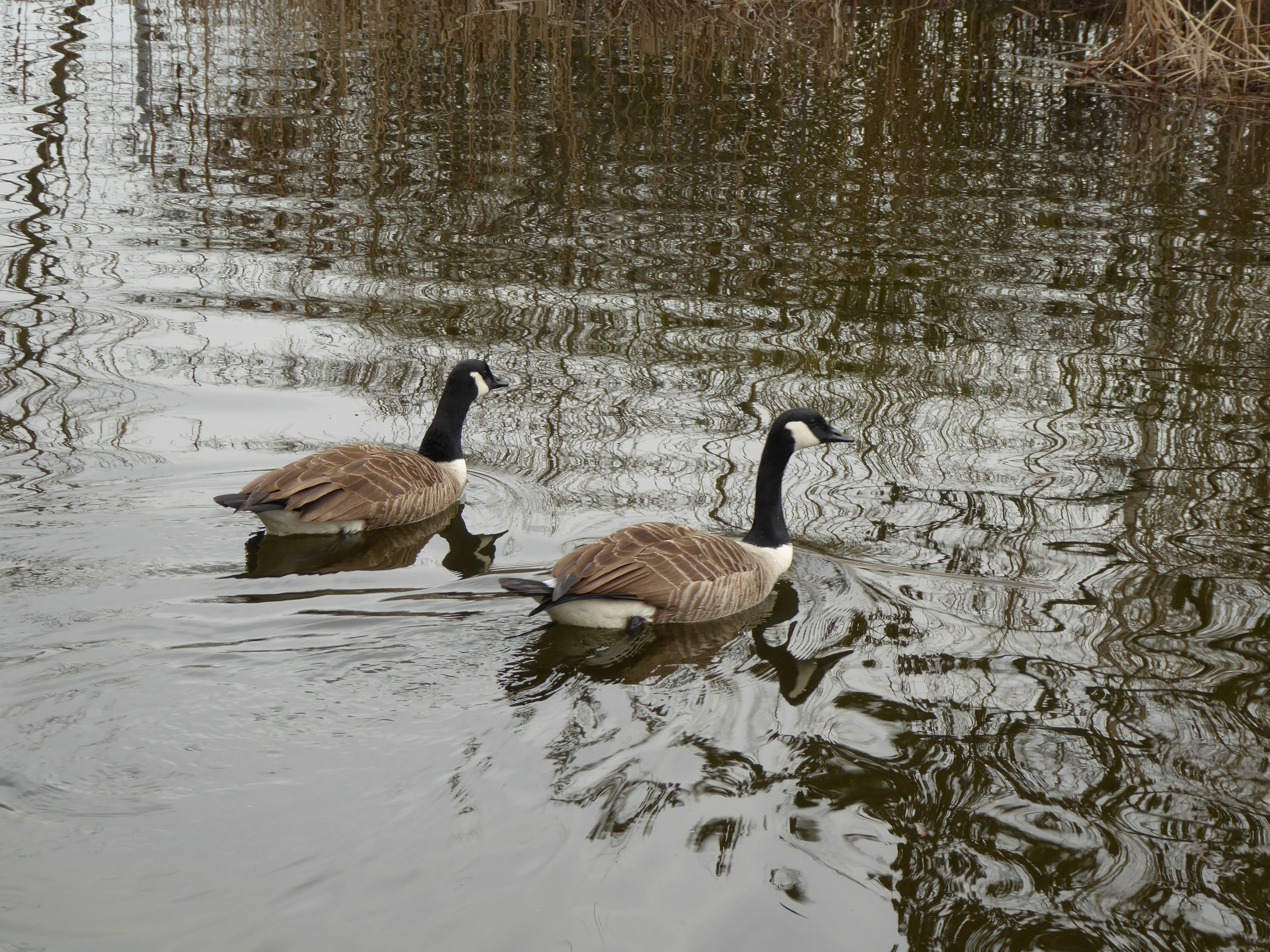
This morning all I could hear was the honking of the geese. 

Many were flying from the park on to the river. I only managed to catch this one on camera. 

Canada geese are very common but I did spot this bird which I think is an Egyptian goose

There were lots of coots in and out of the reeds.


The Ecology Park is next to the river so I was soon on the pathway walking towards Greenwich.

I noticed this sculpture on one of the piers.

This was a new sculpture for me and unfortunately I couldn't find out any information about it.


In the distance I could see the cable car stretching across the river.
Just below the Emirates cable car is this sculpture by Anthony Gormley known as 'The Cloud'. From a distance you can make out the figure of a man within the structure.


Once you walk round the bend of the river you will see this  sign in the middle of the path. Fortunately  there was an explanation nearby. The road sign artwork by Thomson and Craighead, marks the 24,859 mile distance around the earth and back. Its placement is on the Greenwich meridian line which is located at 0 degrees.

Across the river are the buildings on Canary Wharf.


It was low tide as I walked along the river and looking at the clean patches of sand I can now believe that The Thames is one of the cleanest metropolitan rivers in Europe with over 300 different species of fish living in its waters.


Monday, 15 February 2021

Lockdown week 6

 This week I received my first covid vaccination which was probably the highlight of the year! The vaccination programme seems to be the only thing we have managed to get right in the UK. There is a strict order of who receives the vaccine and it was finally my turn. It is a huge administrative exercise to vaccinate the whole country. It is not compulsory and there will be some people who will not want to have it but I hope the numbers will be high enough to prevent its rapid spread once again. The numbers of confirmed cases, covid hospital admissions and deaths are gradually reducing but the numbers are still far too high for us to come out of lockdown.


I am no longer walking in the crowded parks but going a little further out in Kent.  I can still walk here from my daughter's where I am staying from Sunday to Friday.


For those of you who were interested in this Jigsaw, I finally finished it. It took quite a few hours, (actually loads of hours). I thought the reflection was difficult until I tried to do the sky!


All that remains is to take it apart and pass it on to someone else to complete.


Monday, 8 February 2021

Fun in the snow

 Home schooling with a difference today as we had a quite a snowfall overnight. 

It was all about snowman building, 


making bird feeders (the seeds and fruit are not frozen but held together by fat);


and of course - sledging.

It was good to be able to do something different. Lockdown is hard on the children as they are desperate to be back at school with their friends. it will be at least a month before that happens.


Monday, 1 February 2021

Crowded parks


Another delightful walk around Greenwich Park this week.


Some storm damage from the previous week.


These photos were taken in the enclosed flower garden.  No ball games, cycling or dogs off the lead are allowed in this part of the park. Consequently it is much quieter.


In the rest of the park, the pathways are really busy.  Time for me to find another local walk