Sunday, 2 June 2019

Snaefell


This is the Snaefell Mountain Railway in the Isle of Man. Snaefell is the Island's only mountain at 2036 ft (621m). The name Snaefell comes from the Norse for Snow Mountain. The  electric railway  has been in operation since 1895 and is the only one in the British Isles. The line is 3 1/2ft gauge covering 5 miles with a steep incline of 1 in 12 running on a 53 chain line. It has a centre line  to aid braking. Much of the rolling stock is original from the Victorian era.

The Railway doesn't operate in the winter as the overhead wires are taken down on the exposed part of the route to avoid damage from icing.

There is only one tram at a time going up or coming down. The seats inside are very narrow and it is a tight squeeze to fit two people onto the seats. The backs of the seats can be moved so you can choose which way you would like to face.

On the way you can see the Great Laxey wheel and mines. The area was rich in lead ore as well as zinc and silver ore.


Mining here began in the late 18th century. When it was at the height of production in 1854, the Great Laxey Wheel was constructed to pump water out of the mines The wheel could pump 250 gallons of water every minute from the mines some 180m away and 460 metres below ground.

The mine closed in 1929.


The track crosses a road. This road is used for one of the most famous events on the Island, the TT races. The road course is one of the fastest courses for motor bikes in the world. The races happen during the first week in June and so they were preparing the course when we were there. The corners of buildings and walls were all being padded with straw.

I assume this bridge is to allow spectators of the races to get from one side of the road to another.

There is a cafe up at the top which is just as well as the wind was howling when we reached the top making it difficult to stand up.


In fact I decided not to try and reach the marker at the summit.

On a clear day you can see England, Ireland, Scotland and Wales from here but unfortunately it was hazy and good views were not possible
It was possible to see the sea though.

We decided to go back down on the next train. Had I been by myself I think I would have chosen to walk down. The next time I visit this island I will be bringing my walking boots!


Monday, 27 May 2019

Isle of Man

Last week I spent a few days on the beautiful Isle of Man. The island is situated in the Irish sea between Ireland and the NW coast of England. It has a population of less than 100,000 and covers an area of 572 square km. (221 square miles) We stayed in the town of Douglas, the capital of the island.

Douglas lies on the coast and our hotel room overlooked the sea. The Isle of Man is one of the British Isles but is not part of the United Kingdom. It is a British Crown Dependency and self governs its internal affairs under the supervision of the British Home Office.


Out in Douglas Bay we could see The Tower of Refuge. It is a small structure erected in 1832 on a partially submerged reef, originally for the purpose of offering shelter to shipwreck victims until help could arrive.


The Isle of Man is one of the British Isles but is not part of the United Kingdom. It is a British Crown Dependency and self governs its internal affairs under the supervision of the British Home Office. Although their currency is Sterling, they have their own notes and coins which are not legal tender in the UK. They also have their own  language and signage is in both Manx and English.


Public transport on the island is excellent which was ideal as my friend, J, is not a great walker so we would be using public transport to get around. With that in mind we bought a 'Go Travel' card for £36 which would cover us for all forms of transport, including the heritage railways, for 3 days. We definitely got our money's worth. 
It was only an hour's flight from London so we were on the island by 9am. Neither of us had been to the island before so we wanted to see as much as possible.With perfect blue skies we took a trip on the Electric railway to Ramsey, the other large town on the island.

Inside the wooden carriage. It was a delightful ride and gave us a chance to see the beautiful scenery.


Ramsey wasn't as big as I thought it would be but it had a great fish and chip shop which we just had to try. Mmmmm. They were excellent. Didn't think of taking a photo just wanted to devour them!


The old Courthouse which has been used as a Post Office and a Police station, is currently under discussion about its future. It is an historical building and it is hoped it will be used by the community in some way as well as being financially viable. If you look at the top of the building you will see the national symbol of the island, the three legs of Man. The symbol seems to have been adopted in the 13th cent as the royal coat of arms for three kings of the Isle of Man. The emblem appeared on Manx coins in the 17th cent. You notice the emblem everywhere on the island.


The tide was out when we arrived.


After a look around the town we got on a bus back to Douglas.


Yet more scenery to admire.


On our return to Douglas we passed this statue of  Sir Norman Wisdom who called the Isle of Man his home for 30 years.

Sharing with Our World Tuesday

Sunday, 19 May 2019

Van Gogh at Tate Britain

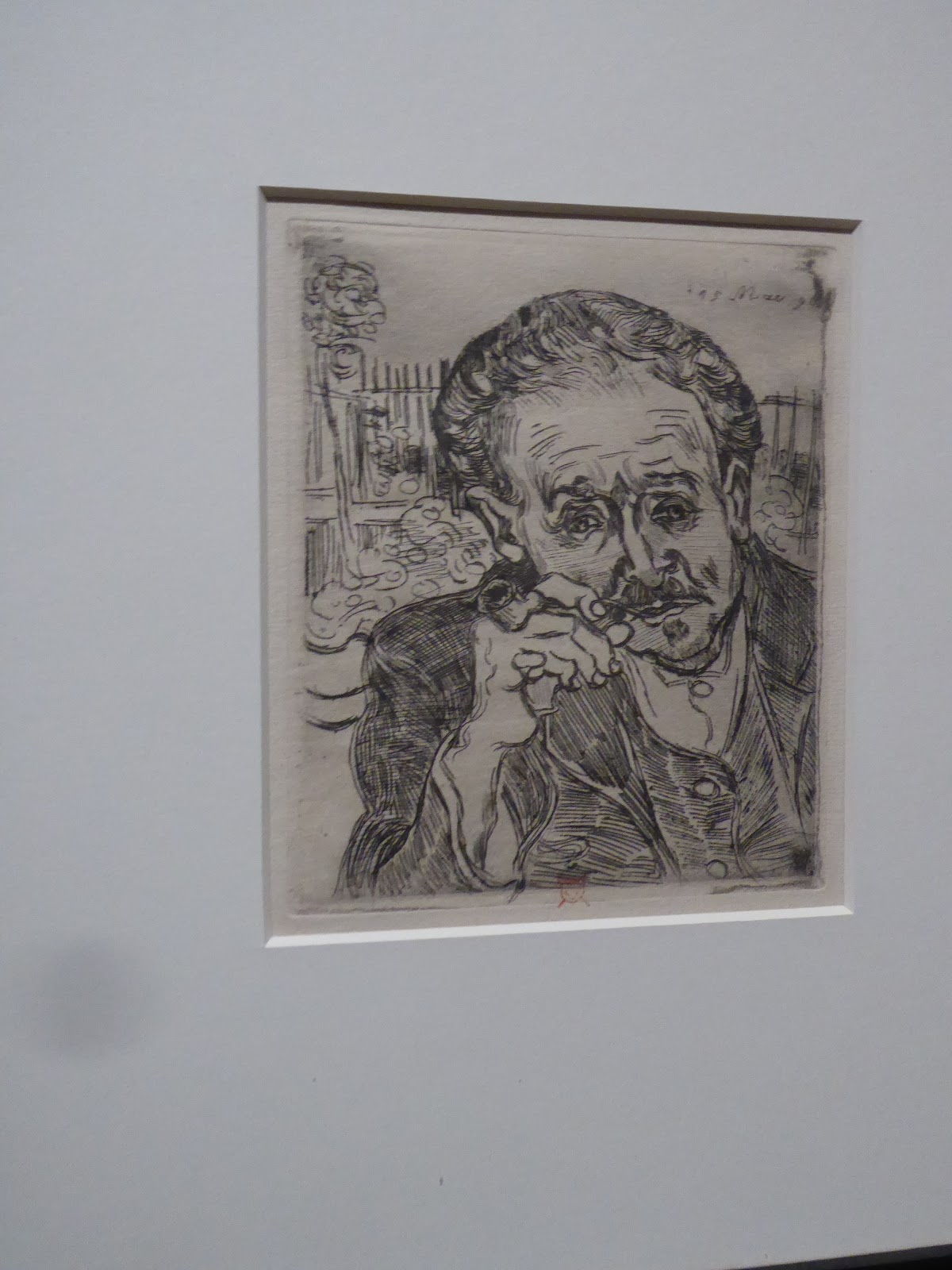
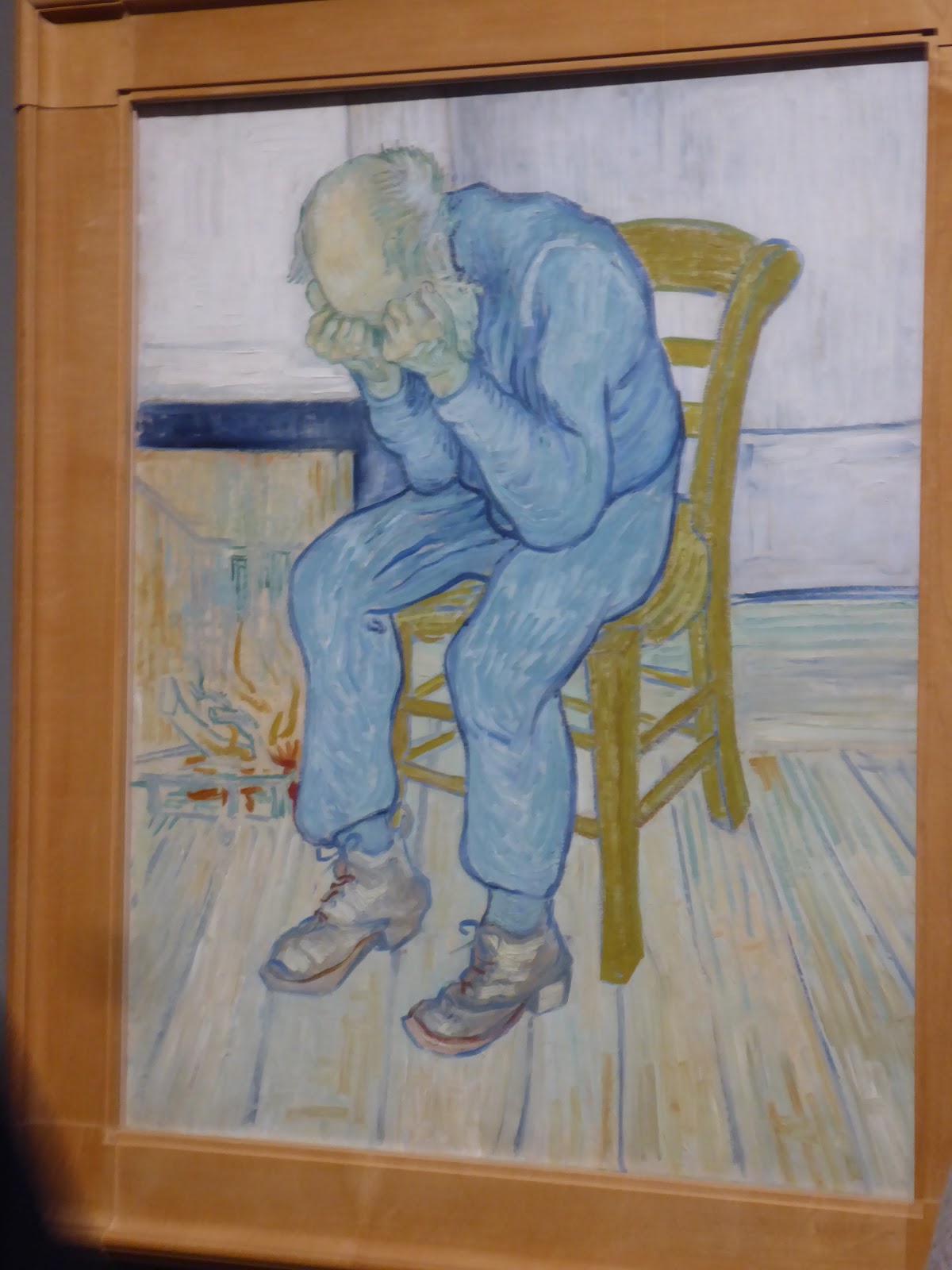
 The major exhibition currently on at the Tate Britain is Van Gogh and Britain. Its aim is to show how Van Gogh was inspired by Britain and how he inspired British artists. As you can imagine it is a popular exhibition and it was difficult to get a clear view to take photos. Apologies if some are not that clear. I photographed the information next to the paintings but some are much too blurred to post which means I don't know some of the names or dates of the paintings! I have also messed up the information relating his work to British artists but I still thought it worthwhile to let you have a glimpse at some of the paintings and drawings on display.


Van Gogh came to Britain at the age of 20 and spent three years in the City. He worked in Covent Garden as a dealer in art photography and prints. He spoke English and enjoyed English Literature especially the works of Charles Dickens. At this stage in his life he was not an artist.