Monday, 7 August 2017

Crossbones Graveyard


I first mentioned the Crossbones Graveyard in 2012 and thought it would be a good idea to see if it still existed. There has been so much construction work in this area that I thought it might have been swallowed up by one of the big developers.
To my surprise the gates were still there festooned with ribbons and various other bits and pieces, but through the gates I could see a garden and went around the corner to see if I could visit.


Crossbones Graveyard is a post medieval burial ground and now, instead of it being a small area of wasteland, it is a community garden opened and maintained by volunteers.

It's  estimated to hold the remains of 15,000 paupers, more than half of them children. This was the Single Women's churchyard for the 'Winchester Geese'.


The Geese were women licensed by the church to work in brothels.


Since 1996 the friends of Crossbones have worked to protect Crossbones and raise awareness  of its historical, cultural and spiritual significance. From 2006 to 2012 they worked alongside the 'invisible gardener' to create a secret guerrilla garden.


Since 2015 they have collaborated with Bankside Open Spaces Trust to maintain a community garden of remembrance on the site of this ancient burial ground.


This is known as the pyramid and is embedded with oyster shells from nearby Borough Market.

Oysters were not taxed and were cheap to buy making them a staple part of a pauper's diet.
No doubt many property developers would love to get their hands on this extremely valuable piece of land so well done to the Friends of Crossbones for all their hard work in turning this into a garden of remembrance.


Sunday, 30 July 2017

Passchendaele

This weekend we remember the thousands of soldiers who lost their lives in the Battle of Passendaele.

The Mud soldier erected in Trafalgar Square is made from sand and mud taken from Flanders fields. It is here as a reminder of the struggle and sacrifice made by all the men who fought in the battle.  With the tremendous amount of rain we have had in the past 24 hours I doubt there is much of the soldier left.


The battle took place on the Western Front in Flanders, Belgium between 31st July and 10th November 1917 and was one of the deadliest clashes during the First World War.

 In just over 3 months 500,000 soldiers fell or were wounded as incessant rain turned the trenches into a sea of mud. Men and horses drowned and tanks got stuck in the quagmire.


'Lest we forget'
Sharing with My world Tuesday

Monday, 24 July 2017

Rye


Rye is a small town in East Sussex. During medieval times it was surrounded by sea but now stands approximately two miles from the coast and is at the confluence of three rivers, the Rother, the Brede and the Tillingham.


With its winding cobbled streets and wide range of antique shops, art galleries and cafes, it is a magnet for tourists visiting this historic area.
The oldest part of the town is higher than the rest of the town in the medieval citadel.


Built in the early 14th century this is the second oldest building in Rye (the oldest being St Mary's Church). Known also as Ypres Tower, the building began life as a defensive fort then a private home, prison, mortuary and now a museum.


From the balcony of the castle you look out over farmland but this used to be one of the largest and most important harbours in the country. In the 16th century it was England's seventh busiest port.


Not far from the castle is St Mary's church.


The square around the church has a number of Tudor buildings and seems little has changed over the centuries.


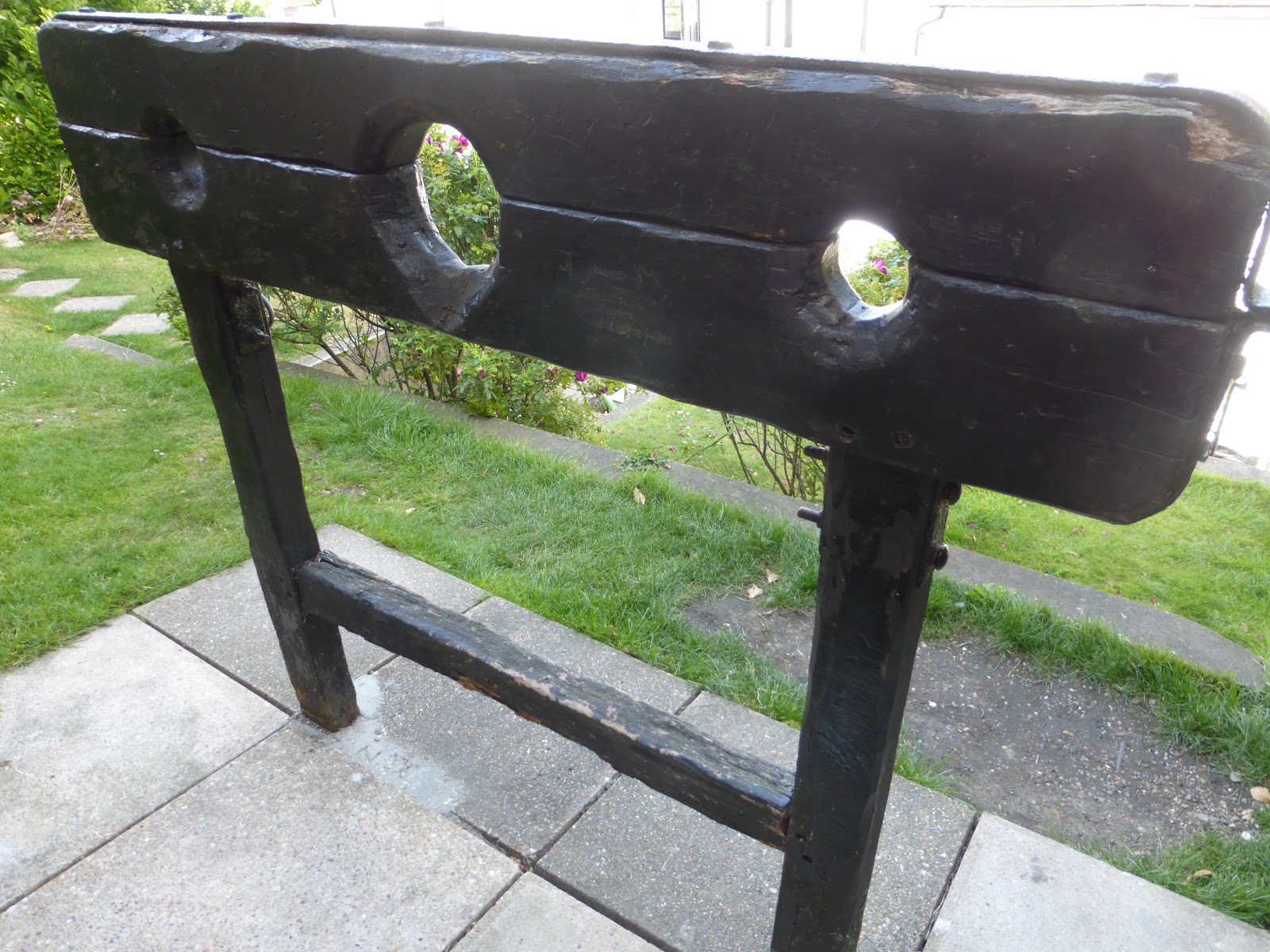
The stocks used during medieval times as a form of punishment and humiliation.


The Mermaid Inn rebuilt in 1420 has cellars dating back to 1156.


Rye has been home to a number of writers and artists. This house was the home of the American novelist, Henry James who lived here between 1898 and 1916. It is now owned by The National Trust.


The house has a beautiful garden with this magnificent old mulberry tree which even had mulberries on it, which was a first for me.


There was no café but in the garden there was a walking stick with a buzzer attached to it. Press the buzzer and a gentleman, who lives here as a tenant of the National Trust, will gladly provide you with a pot of tea and cake for a reasonable charge.


Friday, 21 July 2017

Bodiam Castle

Bodiam Castle in East Sussex was built in 1385 for Sir Edward Dallingridge. He was a soldier, King's Knight and Member of Parliament. It was built at a time when there was a constant threat of invasion by the French and also defending his family and property from revolting peasants.


The portcullis is made of oak with iron covering. Possibly the oldest in the country.


Looking above the gate house you can still see the family coat of arms.

At the other side of the castle is the Postern gatehouse, this was the entrance for  tradespeople. Climbing to the top of the Postern tower gives a good view over the castle and its layout. The rooms on the right hand side were the Lord and Lady's apartments. This was the East side so that they would have thelight from the morning sun. On the West side of the castle were the servants quarters and kitchen.


A garderobe(toilet). Toilets were emptied by the Gong Scourer or Gong Farmer. The job was often done by children who worked at night to clean out the pots, pits and chutes.


Fireplaces were a rare feature in 14th century buildings and were a sign of wealth. Sir Edward had 33 built into the walls of his castle.


 we
re

Look how thick the castle walls were


Archeaological excavations have discovered that the chapel window had colourful stained glass.
Sharing with James at Weekend Reflections