January's weather is not always conducive to being outdoors so I took the opportunity to be out and about visiting exhibitions and museums. This weekend I visited the V and A Museum to see an exhibition entitled ' Fabrics of India'. I have visited India on a couple of occasions and so was particularly interested in seeing this exhibition. Its focus was on the making of fabric from natural materials; dyeing the fabric; then decorating the fabric from block printing to elaborate embroidery. No photography was allowed so you'll just have to take my word for it being well worth seeing. here are a few examples of the type of things I saw in the exhibition.
This is part of a bed cover made in Gujarat in 1725-50. It is linen embroidered(by hand) with silk thread in a chain stitch. This has been made for the export market.

This is printed fabric from South East India c.1660

Part of an 18th cent embroidered floor covering.
Afterwards I walked through a few of the many, many rooms that make up the museum and chose some of my favourite exhibits to share with you.
There are many different collections in the museum containing a total of 2.75 million objects, of which 60,000 are on display in the museum at any one time. This marble statue of Samson slaying a Phillistine is by Giambologna and is the only one to have left Italy. It came to London in 1623 and soon became the most famous Italian sculpture in England.
The huge Cast Courts which display reproductions of medieval and Renaissance Europe.
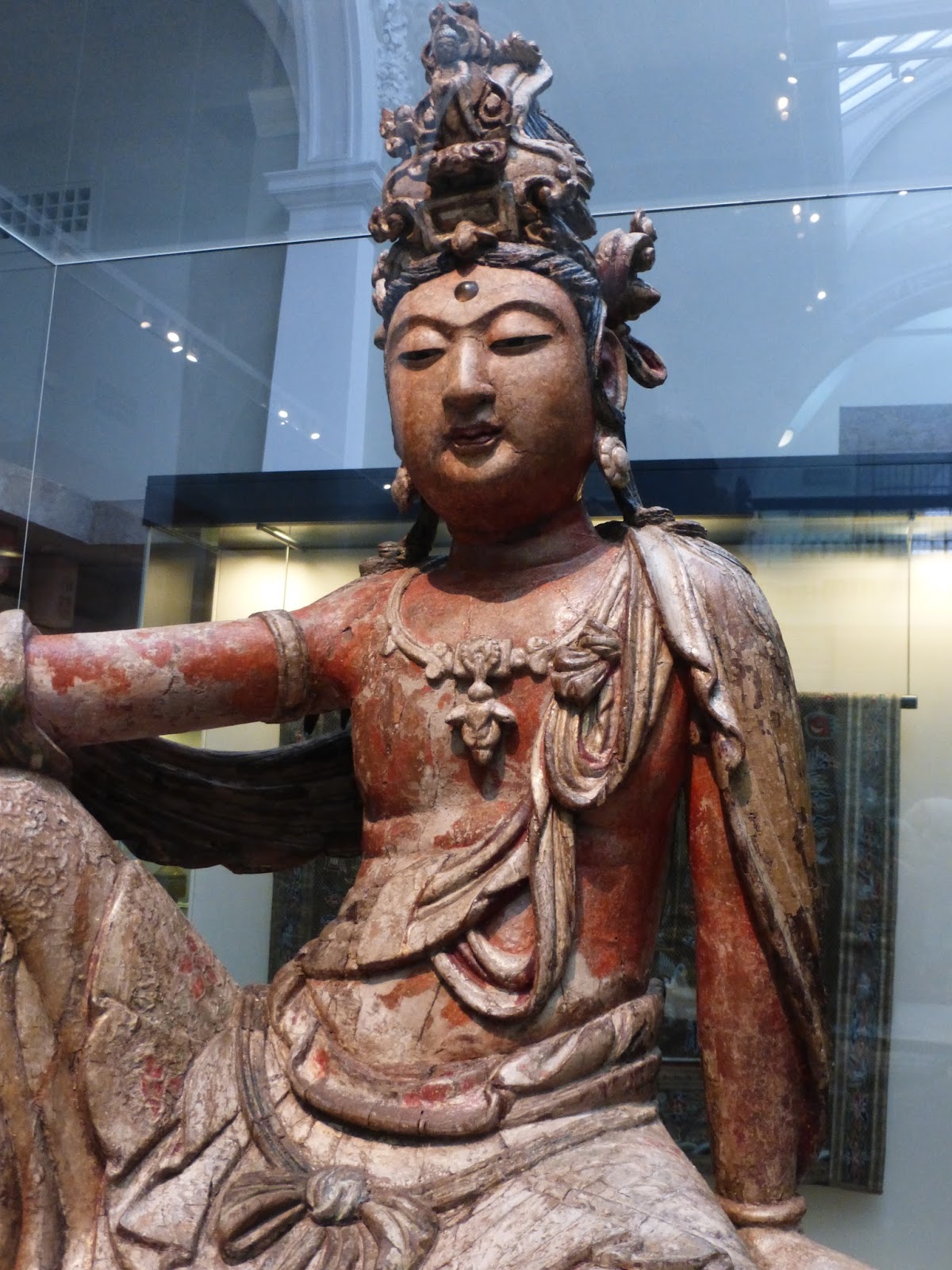
This figure is from Ancient China and dates back to 1200. Originally it was painted in bright colours but during the Ming dynasty, the Guanyin was repainted to look like guilded bronze.
From Egypt, this glass cup was made sometime between 1000-1200
There is always the discussion about whether we should hold treasures in our Museums from other countries but knowing how much destruction is happening in the Middle East in the current climate I was pleased to see this item from Hama in Syria. It is a marble ablutions fountain which provided clean water so that the faithful can wash before prayer.
This tiled panel is also from Syria Dated 1700-50
Tipoo's Tiger is a life sized tiger eating a European. Inside the tiger is a mechanical organ which replicates the growls of the tiger and the cries of the victim! It came to the V and A in 1879 when the Indian Museum's collection was split up.
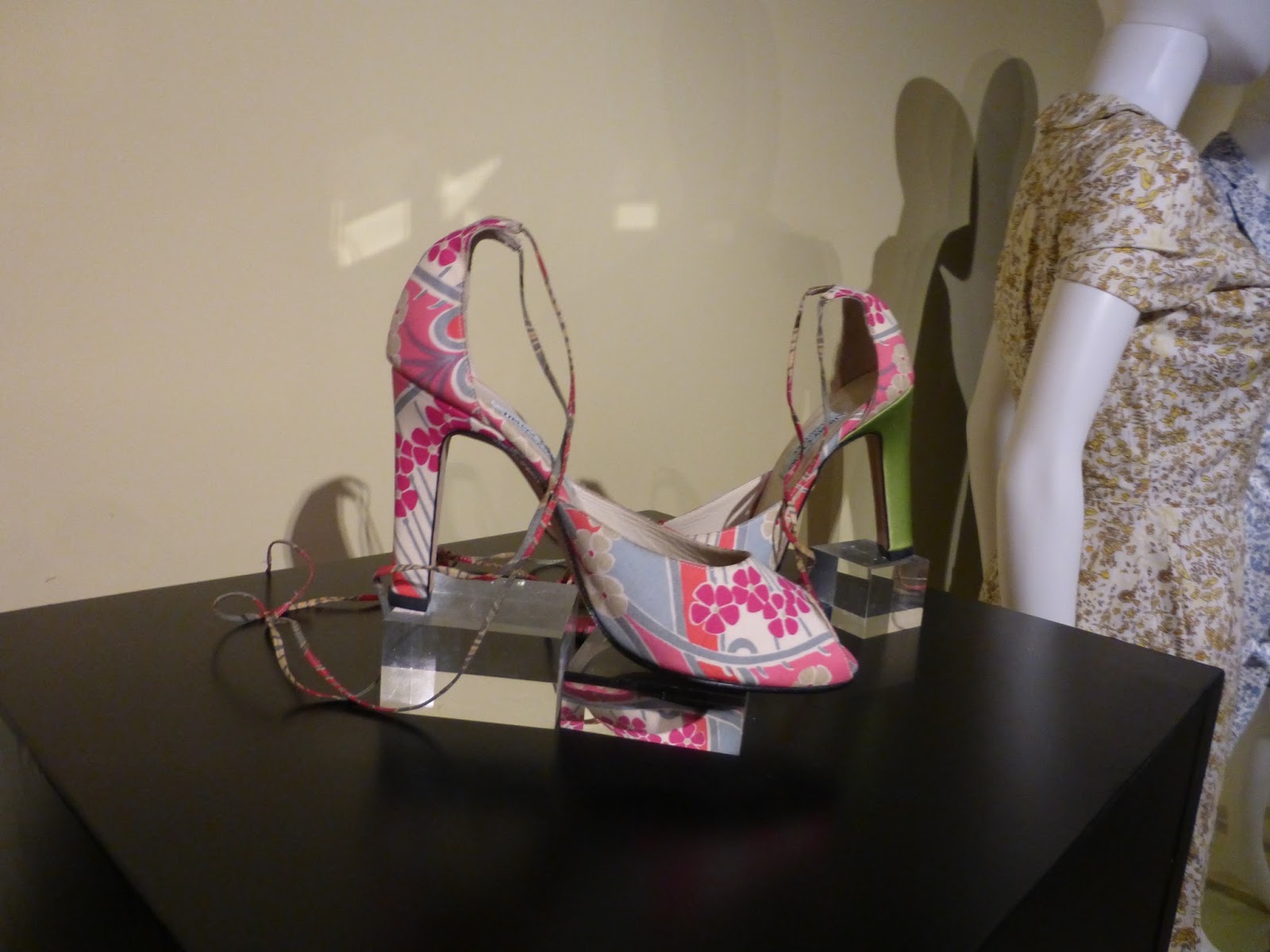
The Museum owns a number of clothing collections from these dresses of the 60s and 70s
to this very impractical court dress of the 1750s
I desperately tried to get a decent photo of this but the lighting wasn't working in the cabinet and the flash just created reflections so this was the best I could manage. This was given to Sir Francis Drake by Elizabeth I possibly in honour of his defeat of the Spanish Armada in 1588. A portrait of him in 1591 shows him wearing the jewel.
This enormous bed is possibly the best known object in the museum. It measures over 3 metres in width and is said to accommodate four couples. It is thought it was made as a tourist attraction for an inn in Ware. Shakespeare mentioned it in 1601 in his play 'Twelfth Night' as the 'bed at Ware'.
The Museum also houses more modern objects in a gallery entitled Rapid Response Collecting. The items in this gallery are here because they represents important moments in design or create newsworthy discussions about how we live today.
This is one of hundreds of tiles made to cover the facade of 'A house for Essex' designed by the artist Grayson Perry. The house opened in May 2015 and is dedicated to a fictional character called Julie and tells her life story through decoration and artworks.
This is the life-sized house built in Essex. It is only available for hire and as yet not available for the public to have a look round.
This is a gun created with a 3D printer. Designed by Cody Wilson, a Texan law student, to defend the right of US citizens to own a gun. It created much debate and the design for the gun was downloaded 100.000 times before he was ordered by the government to remove the designs from his website.
In the jewellery room is this locket, a gift from Queen Elizabeth I to her Vice Chamberlain Sir Thomas Heneage. The front shows the Queen whilst on the back is a boat sailing peacefully on stormy seas. These signs of favours were rich with Tudor imagery. It is made from gold with enamel, encrusted with diamonds and rubies.
This Nautilus shell (1621-40) is beautifully engraved with spiders and insects. My photo does not do justice to the beauty of this item.
The Gloucester Candlestick is another precious Museum masterpiece of medieval art.
Cast in three sections from a variety of precious metals, possibly melted down from old coins. The dense decoration depicting men and monsters in combat is said to illustrate the struggle between good and evil.
The luck of Edenhall
This Syrian glass is one of the most famous exhibits in the Museum. Its pristine condition is rare for an item that dates back to 1350.
It is thought that the goblet was a souvenir from a pilgrimage to the Holy Land. It belonged to the Musgrave family of Edenhall in Cumbria. It is said to have belonged to the fairies. When disturbed they fled and left it behind crying 'If this cup should break or fall, farewell the luck of Edenhall.'